miércoles, 10 de febrero de 2021

pasando alto. Boeing 747-8

mientras la pandemia va pasando o nos vamos acostumbrando, el movimiento por arriba cada vez es mas intenso.
La aerovia va de Ezeiza a Santiago y estos grandes pasan por aca y por suerte es lo unico que hay por ahora, ya que mas abajo casi no hay nada.

Boeing 747-8 de Atlas Cargo 


sábado, 6 de febrero de 2021

Rostec Equips Ansat with Wi-Fi and Satellite Internet

 Rostec Equips Ansat with Wi-Fi and Satellite Internet

January 29, 2021

Kazan Helicopters of Russian Helicopter holding company (part of Rostec State Corporation) has received approval from the Federal Air Transport Agency (Rosaviatsiya) to equip Ansat helicopter with the Mku30 satellite communication system. This option will provide helicopter passengers with high-speed Internet access during the flight.

This Ku band satellite communication system, created by MOST Satellite Systems, provides up to 2 Mbit/s Internet access at the coverage area of the ​​Yamal satellites. Mku30 allows to provide uninterrupted transmission of large amounts of data during flights, organize on-board video conferences and stream high quality video in real time. Data transfer to passengers' mobile devices is provided using a Wi-Fi access point.

"Ansat is a versatile helicopter with a design that allows it to be adapted for a wide variety of operations: from an ambulance to a VIP configuration with advanced digital services. Ansat equipped with high-speed Internet access allows its passengers to stay in touch even during the flight. The service will be useful for both discerning passengers, as well as doctors, police, employees of the Ministry of Emergency Situations, who will be able to stay online to receive operational information," reported in the aviation cluster of Rostec State Corporation.

The first Ansat helicopter, equipped with the new Mku30 satellite communication system, was presented at the 53rd International Paris Air Show in 2019.

"The satellite communication system will be installed in the Ansat helicopter at the request of the customer. It will be most relevant for passenger and VIP modifications of the helicopter. The ability to use the Internet during flights is another step towards improving the comfort level of Ansat helicopters," said Managing Director of Kazan Helicopters, Alexey Belykh.

Russian Helicopters and MOST Satellite Systems signed an agreement on cooperation in the field of joint promotion of helicopter technology equipped with satellite communication systems produced by the latter during the International Helicopter Industry Exhibition HeliRussia-2018. The agreement also provides for the development and implementation of after-sales service projects.

An upgraded Ansat-M helicopter with an increased flight range (up to 800 km with an additional fuel tank) took to the skies on December 29, 2020. The updated version comes with static stability, state-of-the-art avionics and modernized heating and ventilation systems. In 2021, the model will also receive 3-channel autopilot.

Ansat is a light multipurpose twin-engine helicopter. Its serial production is deployed at Kazan Helicopters. Its design enables to promptly transform it both into a cargo and a passenger configuration allowing transportation of up to 7 persons. In May 2015, a supplement to a type certificate for the modification of the helicopter with a medical module was obtained. Ansat is certified for use in the temperatures ranging between -45°С and +50°С, and in high mountains. In August 2018, the Federal Air Transport Agency (Rosaviatsia) approved a major change in increasing the capacity of several assemblies and systems of Ansat. In 2019, Rosaviatsia certified an increase in the airworthiness of Ansat's fuselage to 16,000 flying hours. In February 2020, Russian aviation authorities certified the installation of an emergency floatation system to Ansat. Additional approval was issued for a major change to increase the airworthiness limitations for several major parts of the helicopter, making Ansat even more attractive to potential customers and increasing its competitiveness.
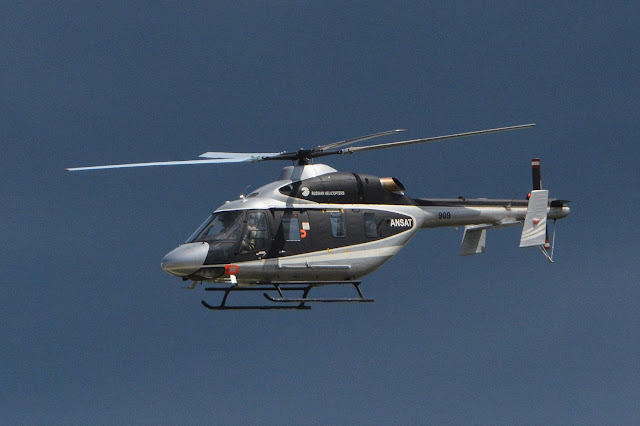


FUENTE: Russian Helicopters

sábado, 30 de enero de 2021

Año nuevo....fotos viejas.

comenzó un año nuevo y es un espanto, pandemia y grandes problemas económicos en Argentina, los gobiernos que han pasado han sido poco mas que mierda pero bueno es lo que soportamos por giles.

como no es posible por ahora hacer eventos nada se pudo ver asi que este blog casi que no tiene actividad como antaño pero como es mi espacio no puedo dejarlo y al menos por ahora ire poniendo imágenes antiguas de eventos pasados, siempre es bueno recordar el pasado.

así que acá van imágenes para ver....

esperando salir de esta situación y volver al ruedo visitando eventos nacionales e internacionales dentro de lo posible


domingo, 27 de diciembre de 2020

ARISS SSTV evento programado para la ISS.


 un evento de ARISS Slow Scan TV (SSTV) está programado desde la Estación Espacial Internacional (ISS). Este será un evento especial de SSTV para celebrar el 20 aniversario de ARISS a bordo de la Estación Espacial Internacional. El evento está programado para comenzar el 24 de diciembre a las 16:40 UTC y continuar hasta el 31 de diciembre hasta las 18:15 UTC . Las fechas están sujetas a cambios debido a los ajustes operativos de la ISS.

fuente: https://www.ariss.org/


estas imágenes fueron obtenidas desde mi estación de monitoreo del clima rosarioaviones.

 antena turnstile 137mhz 

receptor sdr ltr v3

sdr sharp

MMSSTV

 debido a algún inconveniente con el tracking del software, el seguimiento para corregir el doppler fue manual.

se experimenta bastante fading en la señal y por momento muy buena recepción.


viernes, 4 de diciembre de 2020


El SAOCOM 1B alcanzó su órbita definitiva

A lo largo de dos meses, profesionales de la CONAE debieron realizar un total de 27 maniobras de propulsión de diferentes duraciones para ubicar al satélite argentino junto a su hermano gemelo, el SAOCOM 1A, a unos 620 km de la Tierra. A partir de ahora comienza la etapa de calibración final del sensor radar, para luego entrar en servicio operativo.


La Comisión Nacional de Actividades Espaciales (CONAE) en el ámbito del Ministerio de Ciencia, Tecnología e Innovación de la Nación (MINCyT), informa que el satélite SAOCOM 1B esta semana alcanzó su órbita definitiva, luego de los chequeos y revisiones realizadas tras haber sido lanzado el 30 de agosto pasado.

Con este nuevo hito, la Argentina completó, junto al SAOCOM 1A, la primera constelación de satélites SAOCOM de observación de la Tierra con radar de microondas. A partir de ahora comienza la etapa de calibración fina del sensor radar, la enorme antena de 35 metros cuadrados desarrollada en la Argentina, para que esté operativo entre febrero y marzo de 2021, y comience a brindar servicios a nuestro país y exportar imágenes satelitales de excelencia a otras naciones del mundo. Sus principales productos, como el Mapa de Humedad de Suelos, están destinados al sector agropecuario, a la gestión de emergencias ambientales y a numerosas áreas productivas.


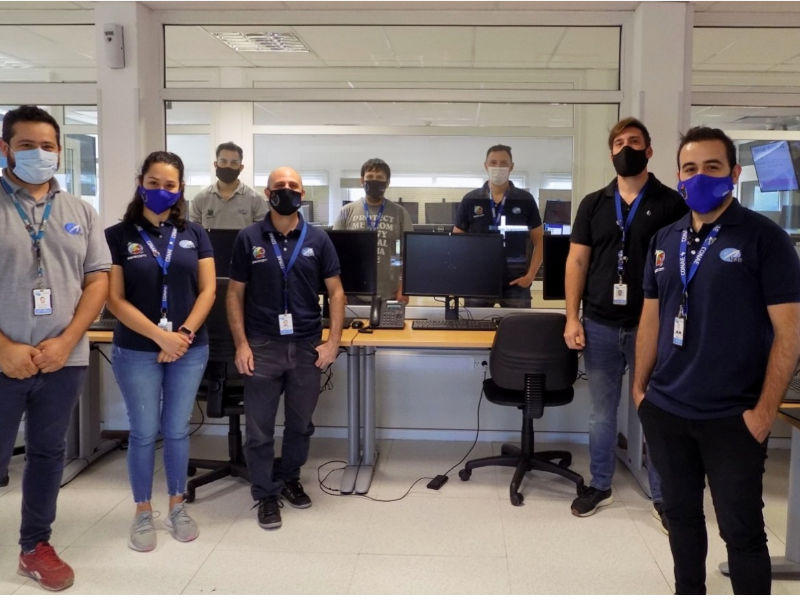
Parte del equipo de operadores de los satélites SAOCOM con su coordinadora, Florencia Bene (segunda a la izquierda), en el Centro de Control de Misión en el centro espacial de la CONAE en Córdoba.

“Estamos muy contentos porque logramos llegar a la órbita definitiva en los tiempos que se planearon, sin ninguna contingencia. Fue un trabajo intenso que demandó dos meses de tareas, con un equipo de profesionales muy coordinado”, informó Lucas BrunoJefe de Operaciones de la Misión SAOCOM“Ahora vamos a adquirir imágenes en diferentes lugares de la tierra con cada uno de los 54 submodos de configuración del satélite y luego las analizaremos para avanzar en la calibración fina del sensor, añadió.

En SAOCOM 1B se lanzó unos 15 kilómetros por debajo del resto de la Constelación para evitar colisiones que pudieran poner en riesgo la Misión. Para subirlo hasta su órbita definitiva, ubicada a una altura aproximada de entre 620 y 622 km de la Tierra, los ingenieros e ingenieras de CONAE debieron hacer maniobras cada tres días coordinadas entre el Centro de Control de Misión, en el Centro Espacial Teófilo Tabanera de Córdoba; el Equipo de Órbita (CODS) de CONAE, ubicado en la ciudad de Buenos Aires; y Space Debris Office, de la Agencia Espacial Europea (ESA). En total, durante estos últimos dos meses se realizaron 27 maniobras, consideradas como actividades críticas.

Bruno comentó que, si bien durante el resto de la vida útil del satélite se van a realizar otras maniobras similares, éstas en particular se destacaron por la extensión“En estos dos meses hicimos maniobras muy largas, con propulsiones que muchas veces fueron de más de 100 segundos. Una vez alcanzada la altura deseada, las maniobras de mantenimiento de órbita van a ser mucho más cortas, de entre 5 y 10 segundos”, especificó.


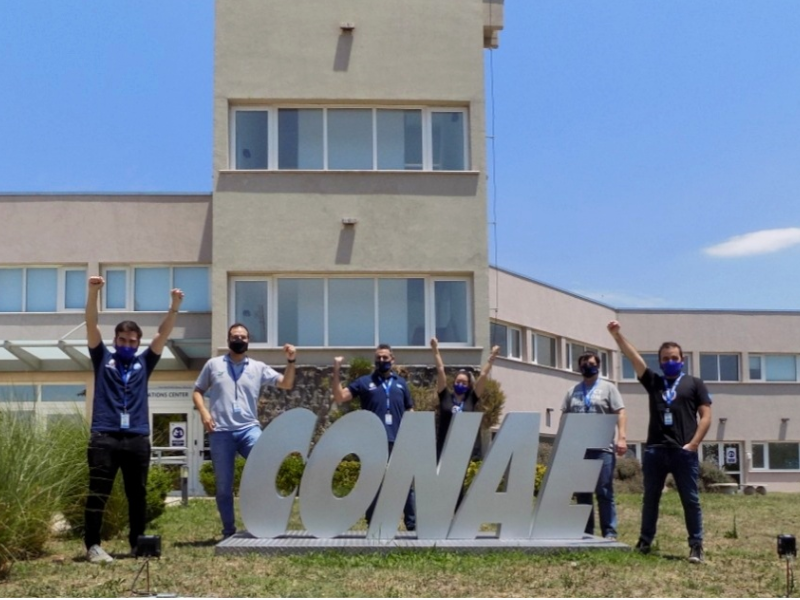
Un grupo de operadores de los satélites SAOCOM festejan la llegada a órbita definitiva frente al edificio del Centro de Control de Misión, en el centro espacial de la CONAE en Córdoba.

Cada una de estas maniobras representó un desafío por la necesidad de ubicar el satélite en la altura adecuada, en relación a los demás satélites que conforman la constelación. En este sentido, explicó que, como si fuera el vagón de un tren, el SAOCOM 1B debía quedar alineado en el espacio con su hermano gemelo SAOCOM 1A, y con los cuatro satélites de la constelación COSMO-SkyMed, de la Agencia Espacial Italiana (ASI), que junto a los argentinos conforman el Sistema Italo Argentino de Satélites para la Gestión de Emergencias (SIASGE). Si el tren pasaba y no llegábamos a la órbita en el momento justo, hubiéramos tenido que esperar mucho más tiempo para poder sincronizar el SAOCOM 1B dentro de la constelación, comentó, y agregó: “Los satélites quedan en el mismo plano orbital, uno a 180° del otro. Como si fuera un reloj, uno siempre está a seis horas del otro”.


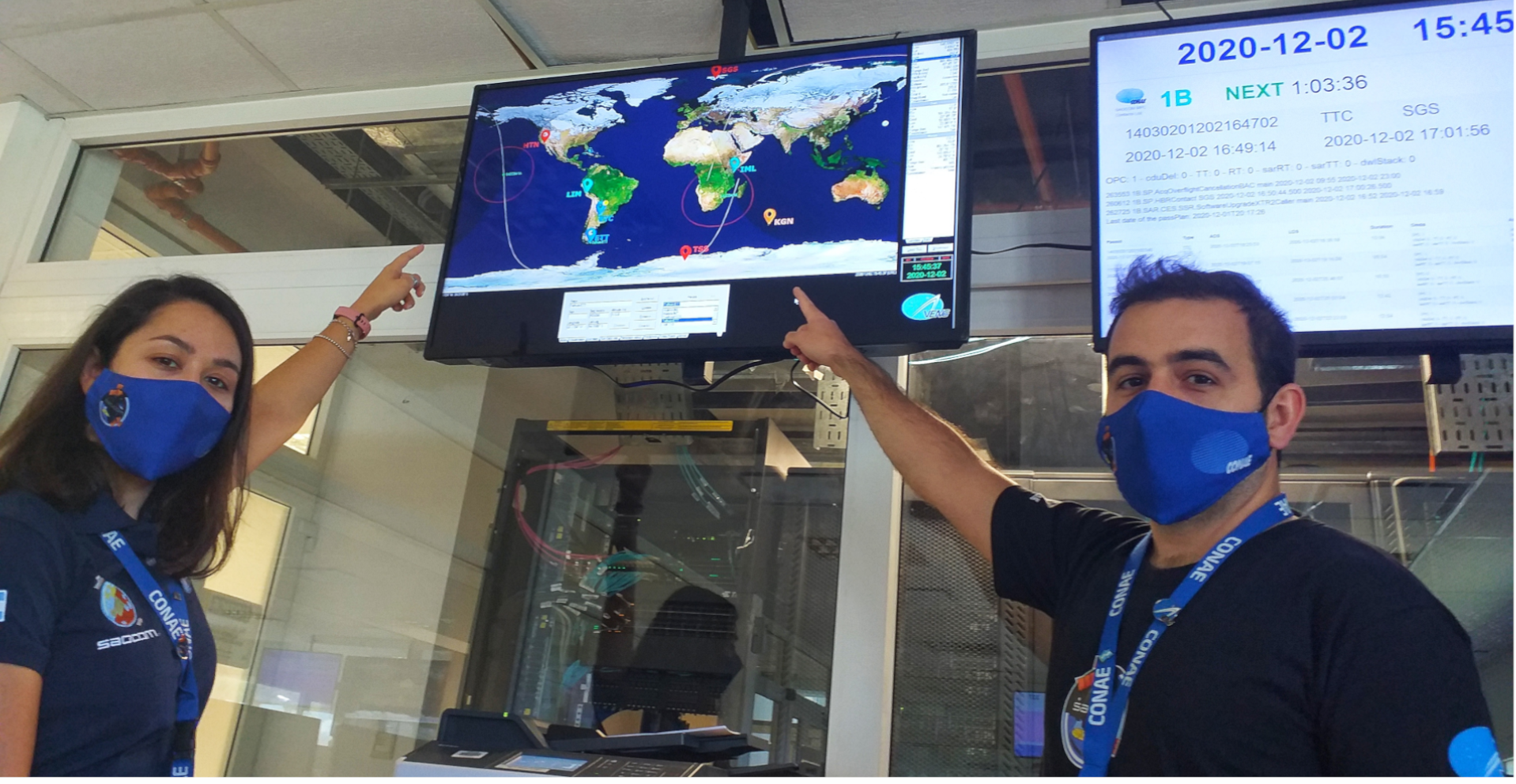
Florencia Bene (izquierda) y Mauricio Bazan (derecha) indican la ubicación de los satélites SAOCOM 1A y SAOCOM 1B en el visualizador de órbitas del Centro de Control de Misión de la CONAE.

fuente: https://www.argentina.gob.ar/noticias/el-saocom-1b-alcanzo-su-orbita-definitiva

domingo, 15 de noviembre de 2020

lugares. Zurich 2019

este año 2020 fue desastroso, al menos en esta zona, no hubo eventos o apenas algunos pocos y por ahora nada se ve hasta el 2021...
Por ahora solo queda recordar el pasado y mantener las entradas en el blog con lugares visitados en los distintos viajes.
hoy le toca a Zurich visitado el 2019 con motivo del ZIGERMEET.


domingo, 8 de noviembre de 2020

Russian Helicopters delivers first batch of helicopter knock-down kits to Kazakhstan


Russian Helicopters delivers first batch of helicopter knock-down kits to Kazakhstan
foto: rosarioaviones. MAKS 2017

Ulan-Ude / November 6, 2020
The Ulan-Ude Aviation Plant of the Russian Helicopters holding (part of the Rostec State Corporation) has delivered two Mi-8AMT helicopter knock-down kits to Kazakhstan to be assembled on the territory of the customer.
The delivery is based on a trilateral contract signed by Kazakhstan Engineering, Kazakhstan's Aircraft Repair Plant No. 405 and Russian Helicopters for semi-knock-down (SKD) assembly of Mi-8AMT / Mi-171E helicopters. The contract, signed in 2019, provides for a total of 17 helicopter kits during 2020-2022.
The main customers for the Mi-8AMT helicopters in Kazakhstan are the National Guard under the Ministry of Internal Affairs and the Committee for Emergency Situations. The first batch of Mi-8AMT kits will assembled for the needs of the Committee for Emergency Situations.
"I'm confident that successful implementation of the semi-knock-down assembly project of Mi-8AMT / Mi-171 helicopters in Kazakhstan will become a significant step forward in the development of the country's helicopter industry and will allow local enterprises to increase their scientific and technical potential", said Leonid Belykh, Managing Director of the Ulan-Ude Aviation Plant.
Assembly and adaptation of the helicopters to the customer's requirements will be carried out by the Aircraft Repair Plant No. 405 in the city of Almaty. The plant holds the greatest competencies in repairing and maintaining this helicopter type in the Central Asian region. The plant is certified by both Kazakhstan and international authorities for the repair, modernization and maintenance of Mi-8/17/171 helicopters.
The assembled helicopters will be tasked with transportation of passengers and goods, emergency rescue operations, forest protection, firefighting, ambulance services and law enforcement operations.
The operational experience and extensive service network of the Aircraft Repair Plant No. 405 will provide integrated service support for customers in the field of deployment.
Kazakhstan has been a long-term partner of the Russian Helicopters and the country operates dozens of Mi-8AMT / Mi-171 helicopters. The republic became the first foreign operator of the latest Mi-171A2 helicopter.
 
Ulan-Ude Aviation Plant JSC is one of the production enterprises of the Russian Helicopters holding. The modern production and technological capacity of the plant makes it possible to manufacture new types of aircraft quickly and combine the creation of prototypes with the line production of equipment. In over 75 years of existence, more than 8,000 aircraft have been built at the plant. Today, the plant specializes in the production of Mi-8AMT (Mi-171E), Mi-171 and Mi- 8AMTSh (Mi-171Sh) helicopters.
JSC Russian Helicopters (part of Rostec State Corporation) is one of the world leaders in helicopter industry, the only developer and manufacturer of helicopters in Russia. The holding company was established in 2007. The head office is located in Moscow. The holding company is comprised of five helicopter plants, two design bureaus, enterprises for production and maintenance of components, aircraft repair plants and a service company providing after-sales support in Russia and abroad. The buyers of the holding company's products include the Ministry of Defense of Russia, the Ministry of Internal Affairs of Russia, EMERCOM of Russia, and other state customers, Gazprom Avia and UTair airlines, as well as major Russian and foreign companies.
Rostec is a Russian State Corporation established in 2007 to promote the development, production and export of high-tech industrial products designed for civil and military applications. The Corporation comprises over 700 organizations that are currently part of eleven holding companies operating in the military-industrial complex and three holding companies working in civilian industry, as well as over 80 directly managed organizations. Rostec's portfolio includes well-known brands such as AVTOVAZ, KAMAZ, Kalashnikov Concern, Russian Helicopters, VSMPO AVISMA, UralVagonZavod, etc. Rostec companies are located in 60 constituent entities of the Russian Federation and supply products to more than 100 countries. The consolidated revenue of Rostec in 2017 amounted to RUB 1 trillion 589 billion rubles, while the consolidated net income and EBITDA amounted to 121 and 305 billion rubles, correspondingly. In 2017 the average salary in the Corporation was 46.8 thousand rubles. According to Rostec's strategy, the main objective of the Corporation is to ensure that Russia has a technological advantage in highly competitive global markets. Rostec's key objectives include the introduction of a new techno-economic paradigm and digitalization of Russian economy.

FUENTE:

Press service of
Russian Helicopters
Tel.: +7 495 627 5545
Fax: +7 495 627 5424
press@rhc.aero
 

www.russianhelicopters.aero
vk.com/russianhelicopters
facebook.com/rushelico
instagram.com/helicopters_russia
youtube.com/user/russianhelicopters